The Future of Electric Vehicles in India: 2025–2030 Outlook
The Future of Electric Vehicles in India: 2025–2030 Outlook
Introduction
India’s electric vehicle (EV) journey is entering its most decisive phase. Between 2025 and 2030, the country is expected to witness a major shift from internal combustion engines to electric mobility, driven by rising fuel costs, environmental concerns, and strong policy support. Electric vehicles are no longer limited to experimentation—they are becoming a practical, scalable solution for personal, commercial, and industrial transportation. This period will define how quickly India transitions toward cleaner, more efficient mobility.
1. Policy Support and Infrastructure Will Drive EV Growth
Government initiatives will continue to play a pivotal role in shaping India’s EV future. Policies focused on reducing emissions, encouraging domestic manufacturing, and expanding charging infrastructure are creating a favorable environment for EV adoption. By 2030, improved access to public charging stations, fast-charging solutions, and battery swapping models will significantly reduce operational challenges, especially for commercial and logistics operators. These developments will accelerate EV penetration across urban and semi-urban regions.
2. Commercial Electric Vehicles Will Lead the Transition
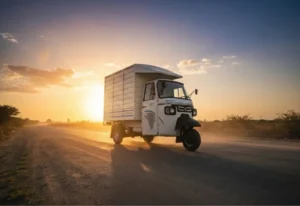
The commercial vehicle segment is expected to be the backbone of India’s EV growth. Logistics, e-commerce, and last-mile delivery businesses are increasingly shifting toward electric vehicles due to lower operating costs and predictable daily routes. Electric cargo vehicles offer substantial savings in fuel and maintenance while meeting sustainability goals. As demand for high-capacity, reliable electric cargo solutions increases, manufacturers are focusing on performance, durability, and payload efficiency.
3. Technology Advancements Will Improve Performance and Reliability
Battery technology and vehicle engineering will see major improvements between 2025 and 2030. Higher energy density batteries, better thermal management, and smarter powertrains will result in longer range, higher load capacity, and improved reliability. These advancements will make electric vehicles suitable not only for city use but also for demanding commercial applications. Performance-focused electric cargo vehicles will bridge the gap between traditional diesel vehicles and clean mobility.
4. GEV’s Role in Shaping India’s Electric Cargo Ecosystem
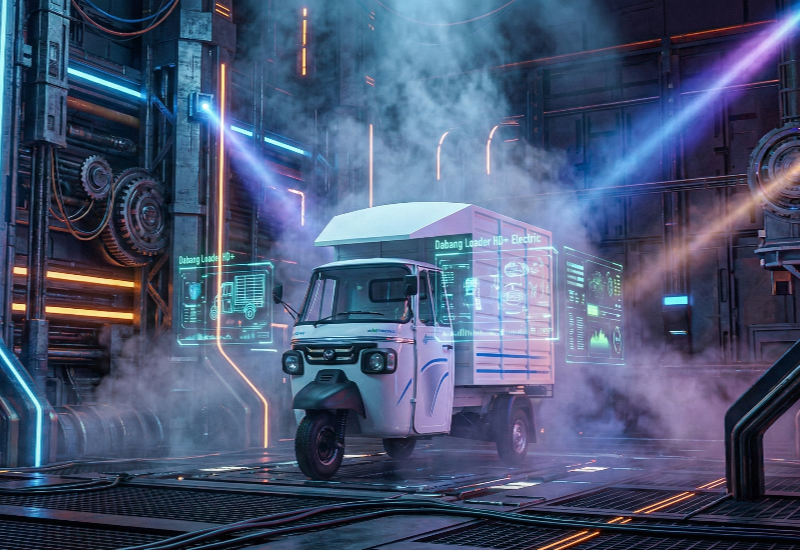
As India’s EV ecosystem evolves, companies like GEV are playing a critical role in delivering practical, future-ready solutions. GEV’s Entrega HD+ is designed to meet the growing demand for high-capacity electric cargo transport. With a carrying capacity of up to 700 kg, Entrega HD+ demonstrates how electric vehicles can match—and in some cases outperform—traditional commercial vehicles in payload capability while offering lower running costs and zero tailpipe emissions. Such products highlight the readiness of Indian EV manufacturers to support large-scale commercial adoption.
Conclusion
The period from 2025 to 2030 will be transformative for electric vehicles in India. With strong policy support, improving infrastructure, advancing technology, and capable products like GEV’s Entrega HD+, electric mobility is set to become the new standard—especially in the commercial and cargo segments. India’s EV future is not just sustainable but also economically viable, positioning the country as a global leader in electric transportation.